
Ramadan is the month of the Quran, and in Australia it has its own character. Because the Islamic calendar moves earlier each year, Ramadan gradually travels through the seasons. In recent and coming years it falls in the warmer months of the southern hemisphere, often overlapping with late summer, the start of the school year, hot days and long evenings. A good Ramadan Quran plan in Australia takes all of this into account, so families can make the most of the month without burning out.
This guide offers a practical plan for adults, teenagers and children, and explains how online Quran lessons can support you.
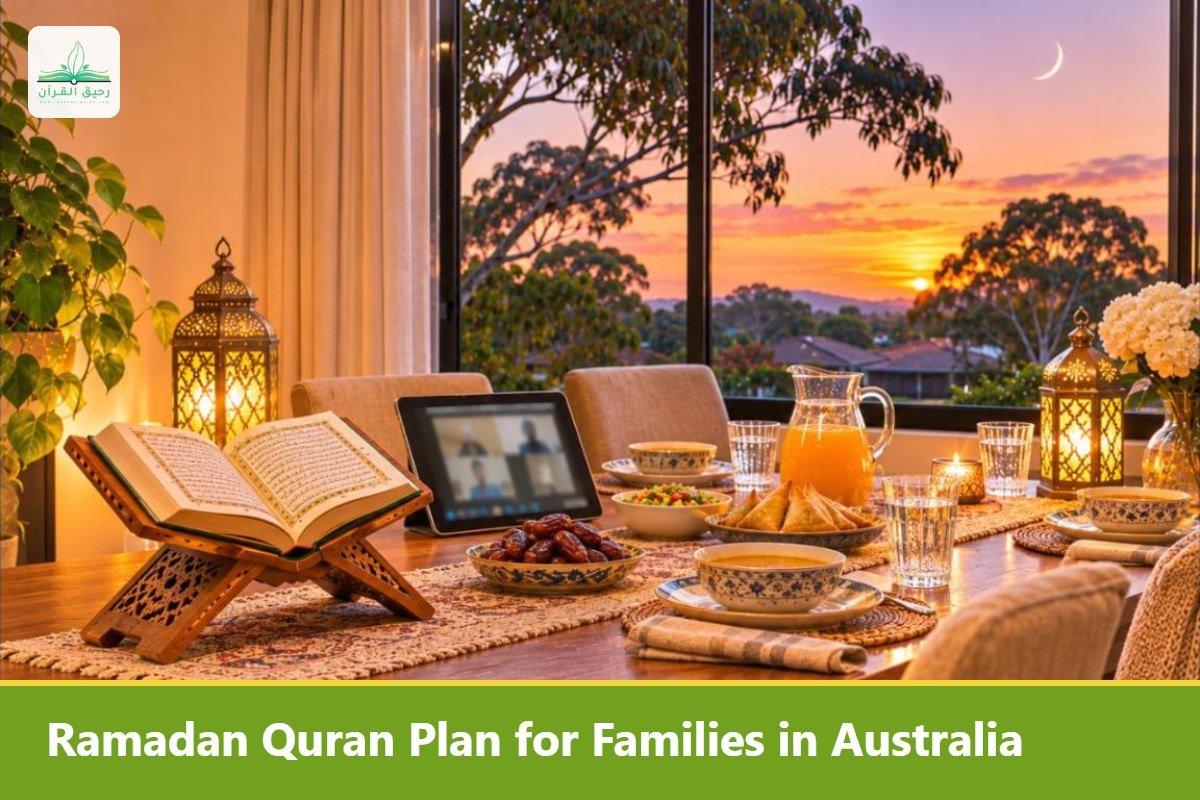
Step 1: Set a realistic Quran goal
A realistic goal is one you can keep every day. Ambitious goals that collapse after a week are less valuable than modest goals kept sincerely.
- Complete reading: about one Juz a day completes the Quran in the month.
- Quality reading: a few pages a day with careful Tajweed.
- Memorization: one new surah, such as Al-Mulk or several short surahs.
- Understanding: the meaning of the passages recited in Taraweeh.
Many families combine one reading goal with one quality goal, such as improving a particular Tajweed rule.
Step 2: Plan around heat and long days
When Ramadan falls in the warmer months, fasting days are long and afternoons can be hot. Energy is usually highest after Suhoor and in the early morning, and lowest in the late afternoon.
- Use the quiet time after Fajr for your main recitation.
- Keep afternoons light, especially on hot days.
- Use the time between Maghrib and Isha for a short family recitation.
- Protect sleep: short, focused recitation beats long, exhausted sessions.
Step 3: Fit Ramadan around school and work
When Ramadan overlaps with the start of the school year, children are adjusting to new classes while fasting or watching their family fast. Keep children’s Quran goals small and joyful, and avoid adding pressure. Adults working full-time can use commutes for listening and early mornings for reading.
Step 4: Add online Quran lessons
Online lessons give your Ramadan structure and accountability. A teacher can help you improve your recitation, check your Tajweed, revise memorized surahs and stay on track. Many students add one or two 30-minute lessons a week during Ramadan, booked in their local time.
See our Australia guide, online Tajweed classes in Australia and online Hifz classes in Australia.
A sample daily routine for adults
| Time | Activity |
|---|---|
| After Fajr | 20 to 30 minutes of reading with Tajweed |
| Commute or lunch break | Listening to a reciter or reflection |
| Late afternoon (2 to 3 days a week) | 30-minute online lesson |
| Between Maghrib and Isha | 10 minutes of family recitation |
Adjust the times to your city and work. Our article on learning the Quran when you’re busy has more tips.
Ramadan for teenagers
Teenagers often feel Ramadan deeply. Give them ownership of a personal goal, such as reading a Juz a day, memorizing a meaningful surah, or studying the Tafseer of what they hear in Taraweeh. A teacher who respects their maturity can make this a turning point. See the Tafseer course.
Ramadan for children
- Memorize one short surah and learn what it means.
- Read one page of the Qaida or Mushaf every day.
- Keep a Ramadan Quran chart with a sticker for each day.
- Recite to the family at Iftar once a week.
Young children can follow our Quran for kids and Noorani Qaida programmes. Families can also read online Quran classes for kids in Australia.
Focus on one Tajweed rule
Because you will recite more than in any other month, Ramadan is ideal for perfecting one or two Tajweed rules. Choose a rule, such as Madd or Noon Sakinah, ask your teacher to focus on it, and apply it every day.
Community Iftars and Taraweeh
Australian Ramadan is full of community life: mosque Iftars, Ramadan night markets in some suburbs and busy Taraweeh prayers. Enjoy them, but protect your personal Quran time too. A short, fixed daily reading, even on busy community nights, keeps your goal on track.
Preparing in the weeks before Ramadan
The best Ramadans start before the month begins. In the weeks before, start a light daily reading routine, book online lessons, and agree on each family member’s goal. Starting early means the routine is already familiar on the first day of fasting.
The last ten nights
The last ten nights are the most precious. Many families increase recitation, revise memorized surahs and reflect on meanings. Plan short, focused periods of recitation rather than trying to stay awake all night, especially if work and school continue.
Sisters
Sisters can request a female teacher for Ramadan lessons and beyond. See our online Quran classes for ladies.
After Ramadan: keeping the habit
The biggest challenge is often what happens after Eid. Instead of stopping completely, reduce your goal but keep it daily, for example a page a day, and continue with one or two lessons a week. Compare weekly options on our pricing page, and read our guide to Quran revision.
A family Quran circle
A short family Quran circle between Maghrib and Isha can become a cherished tradition. Each family member recites a few verses at their own level, from a child’s short surah to a parent’s longer passage, and the family discusses the meaning of one verse together. It takes only fifteen minutes but creates memories that last long after Ramadan ends, and it gives children a proud moment to share what they have learned.
Ramadan in different Australian cities
Fasting times differ across Australia. Cities further south, such as Melbourne and Hobart, have longer summer days than Darwin or Brisbane, and Perth’s times differ from the east coast. Online lessons are always booked in your local time, so your teacher can plan around your city’s prayer times.
After Ramadan: keeping the habit
The biggest challenge comes after Eid. Keep a smaller version of your Ramadan routine, such as one page a day or ten minutes after Fajr, and keep weekly lessons going. A steady habit through the year makes the next Ramadan easier and more rewarding.
Ramadan Quran Plan in Australia: FAQs
Can online Quran lessons continue during Ramadan?
Yes. Lessons can move to whatever time suits your fasting routine, such as early morning, after school before Iftar, or weekends.
How much Quran should we aim to read in Ramadan?
Choose a goal you can keep every day. Some families aim to complete the Quran; others aim for a few pages a day with correct Tajweed.
How can young children take part?
Young children can memorize one short surah, learn its meaning and recite it to the family during the month.
Should we add extra lessons in Ramadan?
Many families add one or two lessons a week during Ramadan to improve recitation and revise memorized surahs.
Do lesson times change with daylight saving during Ramadan?
Lessons are agreed in your local time. If your state changes its clocks during Ramadan, your teacher keeps your local lesson time steady.
Is the first lesson free?
Yes. You can book a free trial lesson before or during Ramadan.
Prepare for Ramadan with a free trial
Start preparing before the month begins. Book your free trial lesson, share your Ramadan goal, and meet a teacher who will help you reach it, wherever you live in Australia.


No comment