
Muslim children growing up in Australia learn a lot at school: English, maths, science and much more. Many parents also want their children to understand their faith: what Muslims believe, how to pray, how to behave, and who the Prophet Muhammad ﷺ was. Weekend schools and mosques help, but not every family lives close to one, and schedules are busy. Islamic studies for kids in Australia can now be taught online, one-to-one, in clear English, by teachers who understand children raised here.
This guide explains what Islamic studies covers, how to plan it by age, and how to combine it with Quran learning at home.
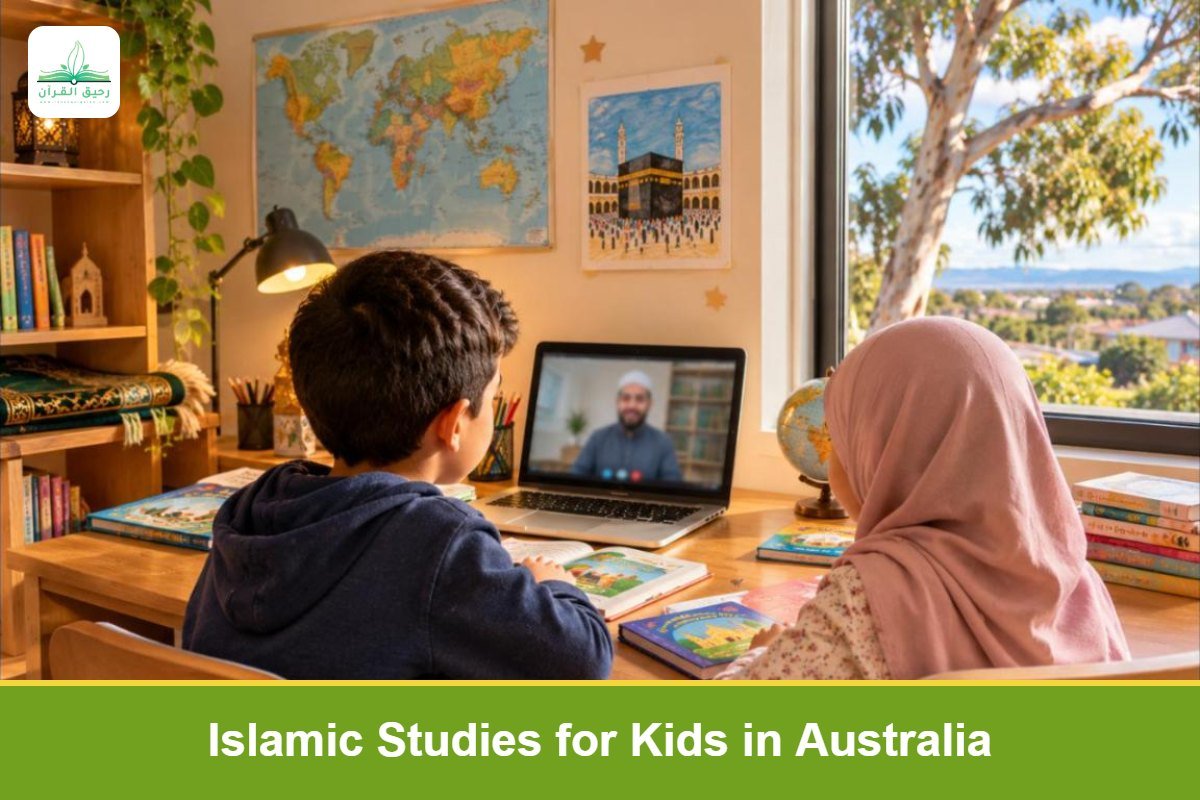
What is Islamic studies for children?
Islamic studies is the part of a child’s education that teaches the beliefs, worship, history and character of Islam. For children, it is taught through stories, conversation, practice and gentle repetition rather than heavy textbooks. Typical areas include:
- Aqeedah (belief): Allah, the angels, the books, the prophets, the Last Day and Qadr, explained simply.
- Fiqh of worship: wudu, Salah, fasting and basic rules children need in daily life.
- Duas and adhkar: short supplications for eating, sleeping, travelling and entering the home.
- Stories of the prophets: Adam, Nuh, Ibrahim, Musa, Isa and others, peace be upon them.
- Seerah: the life of the Prophet Muhammad ﷺ.
- Akhlaq (manners): honesty, kindness, respect for parents and neighbours.
Why online Islamic studies works for Australian families
Australian Muslim families are spread across big cities, regional towns and new suburbs. Online lessons solve distance and timing problems:
- Lessons happen at home, at a time that fits school and sport.
- One-to-one lessons let children ask questions freely.
- Teachers can connect lessons to the child’s life at school and in the community.
- Parents can listen and continue the conversation later.
A plan by age
| Age | Focus | Lesson length |
|---|---|---|
| 5 to 6 | Simple duas, the five pillars as ideas, stories, manners | 15 to 20 minutes |
| 7 to 9 | Wudu and Salah step by step, prophets’ stories, daily duas | 25 to 30 minutes |
| 10 to 12 | Seerah, Aqeedah basics, fasting, understanding short surahs | 30 minutes |
| 13+ | Deeper Seerah, questions about faith, identity and character | 30 to 45 minutes |
Teaching Salah
Learning to pray is one of the most important goals. Teachers break it into small steps: wudu, the positions of prayer, then the words of each position, starting with Al-Fatiha and short surahs. Children practise in front of the camera so the teacher can gently correct them. Parents can then pray together with their children at home.
Stories and Seerah
Children love stories. The stories of the prophets and the life of the Prophet Muhammad ﷺ teach patience, courage, honesty and trust in Allah. A good teacher tells the story, asks questions and links the lesson to the child’s week, for example how to be honest at school or kind to a new classmate.
Answering children’s questions
Children raised in a diverse country like Australia often ask big questions: why we pray, why we fast, why some friends celebrate different holidays. One-to-one lessons give space for these questions, answered gently and with confidence, so children feel proud of their identity.
Combining Islamic studies with Quran lessons
Many families combine Quran reading with Islamic studies. For example, three Quran lessons a week plus one Islamic studies lesson, or a few minutes of Islamic studies at the end of each Quran lesson. Explore our courses:
- Islamic courses for children and adults.
- Noorani Qaida course for beginners.
- Quran for kids for fluent reading.
- Tajweed for kids.
- Arabic for kids to understand the meanings.
For age guidance on Quran reading, see online Quran classes for kids in Australia.
Building good habits at home
Islamic studies works best when it continues at home:
- Say the dua before eating together at dinner.
- Pray at least one prayer together as a family each day.
- Read a short prophet story at bedtime.
- Praise good manners when you see them.
For more ideas, read how to teach Quran to kids.
Ramadan and Eid
Ramadan is a natural time to deepen Islamic studies: the meaning of fasting, the story of the revelation of the Quran, and the value of charity. See our Ramadan Quran plan for Australia.
Learning for parents and sisters
Parents who want to refresh their own knowledge can join too. Sisters can explore our online Islamic courses for ladies and adults can see our Quran classes for adults.
Choosing a teacher
Look for a teacher who is knowledgeable, patient and warm, explains clearly in English, and keeps lessons interactive. Use the free trial to see how your child responds. For a full checklist, read how to choose an online Quran academy.
Online and local community
Online lessons complement local mosques, Islamic schools and community programmes. Children still benefit from Jumuah, Eid prayers and friends at the mosque. See online Quran classes vs mosque classes.
For a general introduction to Islam in Australia, the Australian Federation of Islamic Councils lists community organisations across the country.
A sample term plan
Parents often like to see how Islamic studies is organised over a school term. Here is an example ten-week plan for a child aged 8 to 10:
| Weeks | Topic |
|---|---|
| 1 to 2 | Who is Allah? The six pillars of Iman explained simply |
| 3 to 4 | Wudu and the steps of Salah, practised on camera |
| 5 to 6 | Stories of Prophet Ibrahim and Prophet Musa, peace be upon them |
| 7 to 8 | The early life of the Prophet Muhammad ﷺ |
| 9 to 10 | Manners at home and school, daily duas and a fun review quiz |
The plan is flexible. If a child has a question about something that happened at school, or Ramadan is approaching, the teacher can adjust the topics.
Making lessons interactive
Good online Islamic studies lessons are not lectures. Teachers use questions, short quizzes, drawings, role-play and real-life examples. A child might act out how to greet a guest, draw the steps of wudu, or explain a prophet’s story in their own words. This keeps children engaged and helps them remember.
Islamic Studies for Kids: FAQs
What do children learn in Islamic studies?
Core beliefs (Aqeedah), how to pray and make wudu, daily duas, stories of the prophets, the Seerah of the Prophet Muhammad ﷺ, and good manners (Akhlaq).
At what age can my child start?
Children can start from about age 5 with simple duas, stories and manners. More structured lessons on Salah and Seerah suit children from about 7.
Can Islamic studies be combined with Quran lessons?
Yes. Many families add a short Islamic studies segment to Quran lessons, or book a separate weekly lesson.
Are lessons in English?
Yes. Lessons are taught in clear English, with Arabic terms explained, so Australian-raised children can understand and ask questions.
Is a female teacher available?
Yes. Girls can request a female teacher.
Is there a free trial?
Yes. The first lesson is a free trial with no obligation.
Book a free Islamic studies trial
Give your child a confident, joyful understanding of their faith. Book your free trial lesson today, and see our pricing page for weekly options. For more, read our guide to online Quran classes in Australia.


No comment