
Australian Muslim parents often share the same hopes: they want their children to read the Quran beautifully, to understand their faith, and to love Quran time rather than dread it. They also share the same challenges: busy school days, weekend sport, long commutes and, in many areas, crowded madrasah classes. Online Quran classes for kids in Australia can meet those hopes with short, private, encouraging lessons at home, planned around the child’s age and the Australian school year.
This guide explains what children learn at each stage, how many lessons they need, and how parents can help.
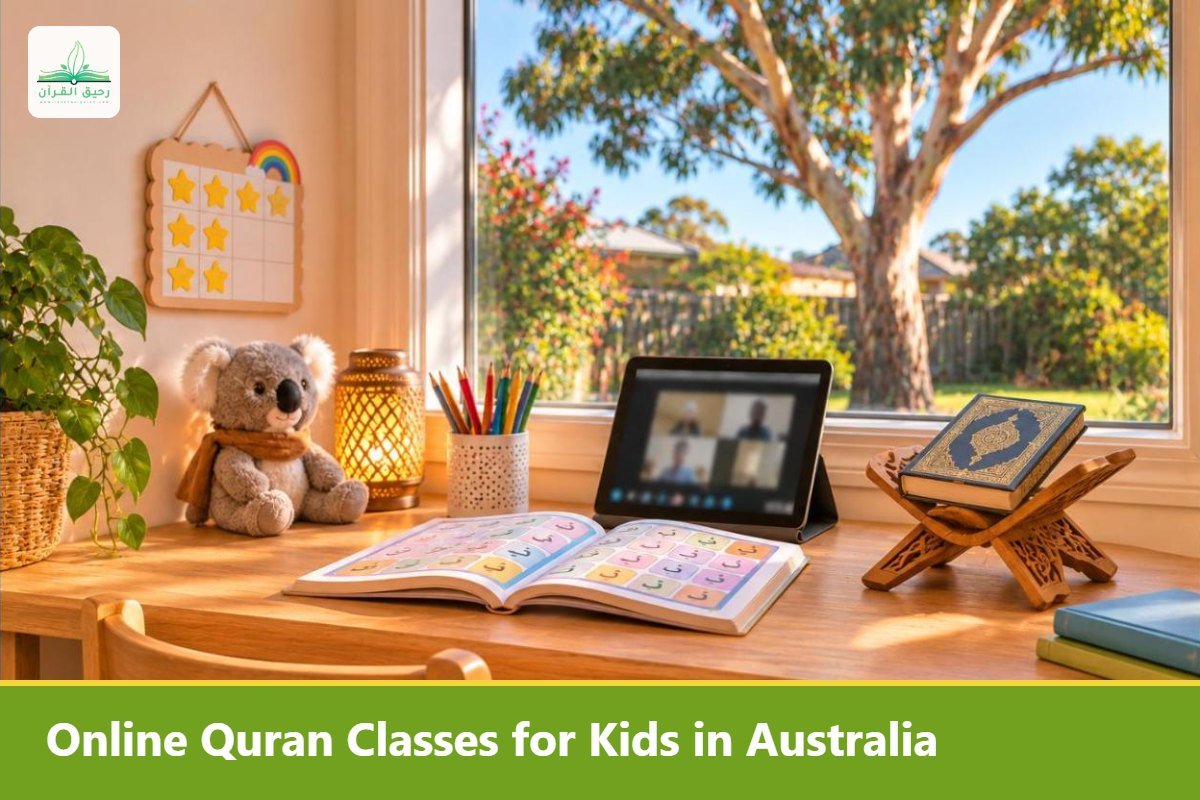
Why one-to-one lessons work for children
One-to-one lessons work for children because the teacher focuses on one child, adapts the pace instantly and corrects every mistake before it becomes a habit. The child reads for the whole lesson instead of waiting for a turn.
In a group of fifteen children, each child may read aloud for only a couple of minutes. Shy children stay quiet, fast learners get bored, and mistakes go unnoticed. In a private lesson, the teacher can spend extra time on difficult letters, move ahead quickly when a child is ready, and build a warm relationship that keeps the child motivated.
What children learn at each age
Every child is different, so treat these ages as a rough guide. The teacher places each child according to their actual level after the free trial.
Ages 4 to 6: letters, sounds and love for the Quran
At this age, around the time children start Prep, Kindy or Foundation, the focus is on recognising Arabic letters, pronouncing them correctly and enjoying Quran time. Children work through the early parts of the Noorani Qaida and memorize short surahs such as Al-Fatiha, Al-Ikhlas, Al-Falaq and An-Nas.
Ages 7 to 9: reading and first Tajweed rules
Children usually complete the Qaida and start reading from the Mushaf. Teachers introduce simple Tajweed rules such as Qalqalah and basic Madd, and memorization of Juz Amma continues. See Tajweed for kids.
Ages 10 to 12: fluency, Tajweed and Hifz
Older primary-school children can read longer passages, apply more Tajweed rules and follow a structured memorization plan in the Quran memorization course. Many also start learning Arabic with Arabic for kids.
Teenagers: depth and ownership
High-school students can refine their recitation, continue Hifz and explore meanings through Tafseer and Islamic studies. Giving teenagers ownership of their goals and a teacher who respects their maturity makes a big difference.
How many lessons does a child need?
| Stage | Lessons per week | Daily practice at home |
|---|---|---|
| Noorani Qaida (ages 4 to 7) | 3 to 4 | 5 to 10 minutes |
| Reading and basic Tajweed | 3 | 10 minutes |
| Hifz (memorization) | 4 to 5 | 15 to 20 minutes |
Lessons are booked in your local time, wherever you live in Australia. Compare weekly options on our pricing page.
Fitting Quran into the four-term school year
The Australian school year has four terms, with short breaks between them and a long summer holiday. This gives Quran learning a natural rhythm.
- Start of the year: book fixed lesson times as soon as the school timetable and sport schedule are known.
- During term: keep lessons short and steady after school.
- Term breaks: add a few extra lessons or a revision week.
- Summer holidays: the best time to finish the Qaida or push memorization forward.
- Ramadan: move lessons around Iftar and set a small Quran goal for the month.
Working around weekend sport
Many Australian children play sport on Saturday mornings. Rather than competing with sport, schedule Quran lessons on weekdays and Sunday mornings. A child who has both Quran and sport in their week learns balance, discipline and confidence.
What a good children’s Quran teacher does
A good teacher for children is patient, encouraging and precise. They correct mistakes gently, explain simply, keep lessons varied and keep parents informed. During the free trial, watch how the teacher reacts when your child makes a mistake, and whether your child seems relaxed. Read how to teach Quran to kids for more.
Making online lessons positive
- Set up the device ten minutes before the lesson.
- Keep the Qaida or Mushaf on a stand and a glass of water nearby.
- Turn off other screens and notifications.
- Sit nearby for the first few lessons, then step back gradually.
Our full checklist is in preparing your child for the first online Quran class.
Your role as a parent
Parents are the most important partners in a child’s Quran journey. Listening to your child read for a few minutes each day, praising effort and showing your own love for the Quran will do more than any extra lesson. Celebrate milestones, and if motivation dips, talk to the teacher about a new goal. Our Arabic games for kids can make practice fun.
Online lessons and weekend madrasah
Online lessons fit well alongside weekend madrasah: the madrasah offers community and friendships, while private lessons provide focused reading time during the week. See online Quran classes vs mosque classes.
Girls and female teachers
Girls can request a female teacher, which many families prefer, especially as daughters get older. See our online Quran classes for ladies.
What to expect in the free trial
In the free trial, the teacher gets to know your child, checks which letters they recognise or how well they read, and suggests a starting point and weekly schedule. Parents are welcome to sit in. The trial is also a chance for your child to meet the teacher and feel comfortable before regular lessons begin.
Keeping motivation high over the years
Quran learning is a long journey, and motivation naturally rises and falls. Make progress visible with a chart, keep goals small and achievable, and celebrate milestones such as finishing the Qaida or memorizing a new surah. When motivation dips, talk to the teacher about a fresh goal or a different time of day, rather than stopping.
Online Quran Classes for Kids in Australia: FAQs
What is the best age to start?
Many children are ready around four or five, about the time they start Prep, Kindy or Foundation. The key is being able to focus for 15 to 20 minutes and repeat sounds after the teacher.
How many lessons per week does a child need?
Three or four 30-minute lessons a week suit most children, with five to ten minutes of daily practice at home.
Will online lessons add too much screen time?
A 30-minute lesson is active learning with a real teacher. Most of the time the child is looking at the book, listening and reciting.
Can siblings learn together?
Siblings usually progress best in separate one-to-one lessons booked back to back, so each child learns at their own level.
Can my daughter learn with a female teacher?
Yes. Girls can request a female teacher.
Is the first lesson free?
Yes. The first lesson is a free trial so your child can meet the teacher.
Book a free trial for your child
Give your child a joyful, confident start with the Quran. Book your free trial lesson, tell us your child’s age and preferred times, and meet a patient teacher. For more, read our Australia guide and Quran for kids programme.


No comment