
Halal is one of the first Islamic words many people hear, often on a restaurant sign or food label. But what is halal, really? It is much more than a food label. Halal (حلال) is an Arabic word meaning permissible or lawful: anything Allah has allowed. In this guide we explain what is halal in simple terms, the opposite concept of haram, the rules for halal food and slaughter, and how halal applies to everyday life beyond the kitchen.
What Is Halal? The Basic Meaning
In Islam, actions and things are generally described in categories. Halal means permitted, and haram means forbidden. A key principle many scholars mention is that, in everyday worldly matters such as food, drink and clothing, things are permissible by default unless there is evidence that they are forbidden. So when asking what is halal, the list is very wide; it is the haram list that is specific.
The Prophet ﷺ said: “The halal is clear and the haram is clear, and between them are doubtful matters which many people do not know. Whoever avoids the doubtful matters has protected his religion and his honour.” (Sahih al-Bukhari and Sahih Muslim)
What Is Halal Food?
Most food is halal. The Quran names specific things that are forbidden. Allah says: “He has only forbidden to you dead animals, blood, the flesh of swine, and that which has been dedicated to other than Allah.” (Al-Baqarah 2:173). Surah Al-Ma’idah (5:3) adds details such as animals killed by strangling or a violent blow. Intoxicants such as alcohol are also forbidden (Al-Ma’idah 5:90).
So, in summary, food is halal unless it contains:
- Pork or pork products.
- Blood.
- Meat from animals that died without proper slaughter.
- Meat dedicated to other than Allah.
- Alcohol or other intoxicants.
- Carnivorous animals with fangs and birds of prey, according to hadith.
Fruits, vegetables, grains, dairy, eggs and most seafood are halal.
What Is Halal Meat?
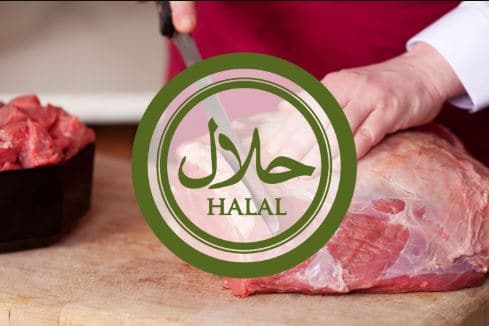
For meat to be halal, the animal must be a permitted animal and must be slaughtered in the Islamic way, known as dhabiha. The main conditions are that the slaughter is done by a Muslim (or, according to many scholars, by one of the People of the Book, based on Al-Ma’idah 5:5), that the name of Allah is mentioned, and that the throat, windpipe and main blood vessels are cut with a sharp blade so the blood flows out. Islam also requires kindness to the animal: a sharp knife, no unnecessary suffering, and not sharpening the blade in front of it.
Some people mistakenly think halal slaughter involves magical words that “make” the meat Islamic. That is not the case. Mentioning Allah’s name is an act of gratitude and acknowledgment that life belongs to Him, and the method is about purity and mercy.
What About Ingredients and E-Numbers?
Modern food can be complicated. Ingredients such as gelatin, certain emulsifiers, enzymes and flavourings may come from animal or alcohol sources. Scholars differ on some of these details, so many Muslims look for reliable halal certification or check ingredient lists carefully. When something is genuinely unclear, the hadith above encourages us to stay away from doubtful matters.
Halal Beyond Food
When people ask what is halal, they often think only of food, but halal covers every part of life:
- Earnings: income should come from honest, lawful work, without cheating, interest-based dealings or harming others.
- Speech: truthful, kind words are encouraged, while lying, backbiting and slander are forbidden.
- Relationships and conduct: Islam sets clear guidelines for modesty and family life.
- Entertainment and clothing: permitted unless they involve something Allah has forbidden.
The Prophet ﷺ said: “Allah is Good and accepts only that which is good.” (Sahih Muslim). Living halal means seeking what is pure and good in every area of life.
Why Does Halal Matter?
Following halal guidelines is an act of worship and obedience. It brings blessing (barakah) to our food and wealth, protects our health and character, and keeps our hearts close to Allah. Understanding what is halal also helps Muslims living in non-Muslim countries make confident choices when shopping, eating out or working.
Learning More About Islam
To understand halal and haram in depth, the best source is the Quran itself. You can read the verses mentioned above with translation on Quran.com. If you would like to read the Quran in Arabic and study its meanings with a teacher, explore our Islamic courses, Quran classes for adults and Tajweed course. Parents can teach children the basics through our Islamic studies for kids guide.
What Is Halal: FAQs
What is halal in simple words?
Halal means permissible or lawful in Islam: anything Allah has allowed.
What is the opposite of halal?
Haram, which means forbidden.
Is all seafood halal?
Most scholars consider fish and most seafood halal, though there are some differences of opinion about certain sea creatures.
Is vegetarian food always halal?
Usually, but check for alcohol-based ingredients or flavourings and animal-derived additives.
Does halal only apply to food?
No. Halal applies to earnings, speech, clothing, relationships and every part of life.
Study the Quran With a Teacher
Deepen your understanding of Islam through the Quran. Book a free trial lesson with one of our teachers.


No comment